
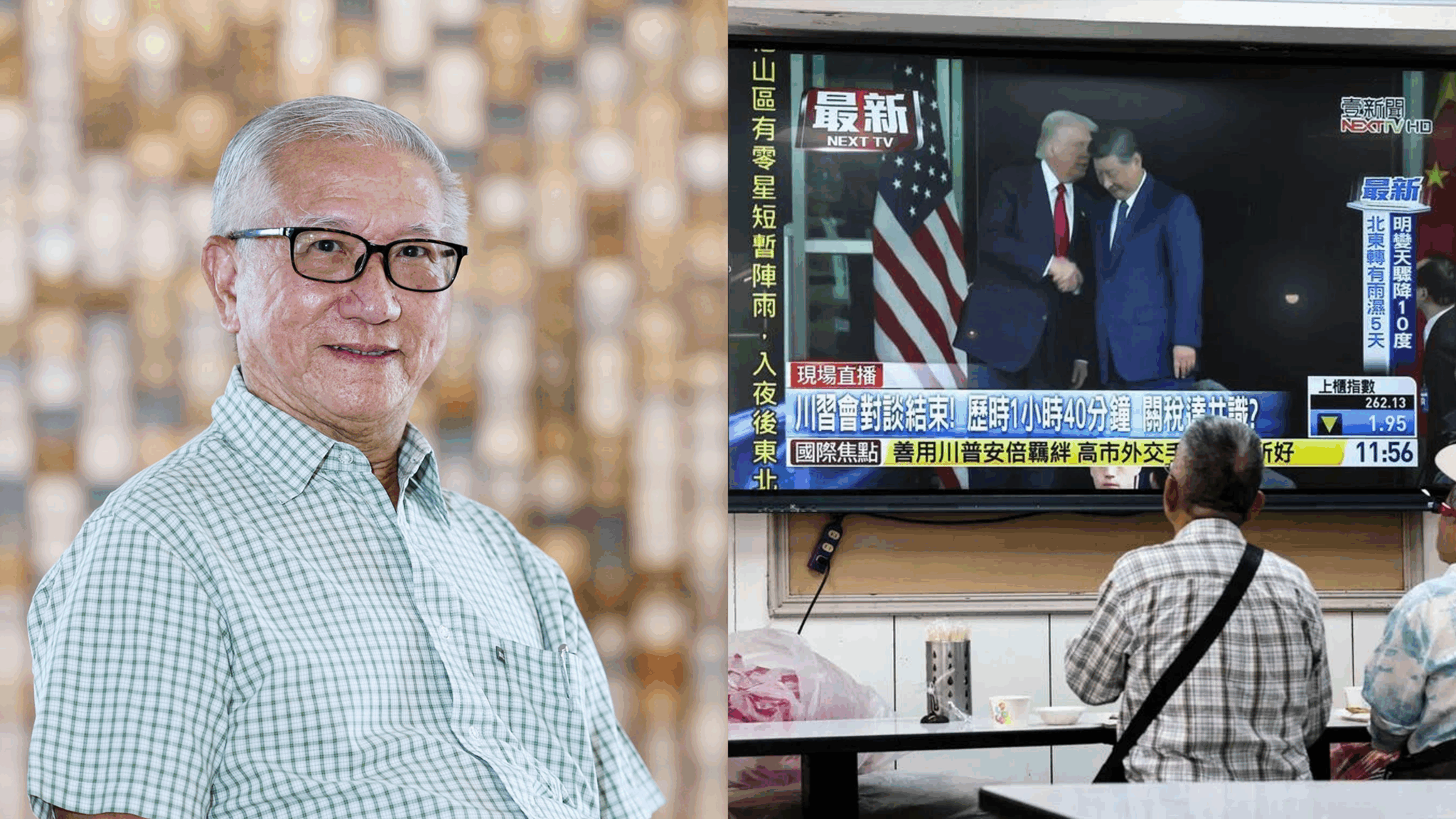
Several Taiwanese talk show personalities have recently taken aim at Singaporean Chinese, suggesting that Singaporeans “do not see themselves as Chinese” and implying that Singapore’s Chinese community is culturally distant from China.
Former Member of Parliament and former journalist Goh Choon Kang has since responded with a detailed explanation, saying the commentators misunderstood key concepts about ethnicity, nationality, and identity in Singapore.
Taiwan commentators say Singaporeans “look Chinese but aren’t Chinese”
In a series of Taiwanese TV talk shows, different panellists criticised Singaporean Chinese. One professor claimed that while Singaporeans “look very much like Chinese people”, they are “not the same deep down”.
He shared that a Singaporean friend learned Malay instead of Chinese in school, and argued that Singaporeans only learn Chinese “for business convenience”, since English is the most important language in Singapore.
The professor also said that a Singaporean student once dropped his NRIC in his car and insisted the card had “only English” on it. From this, he concluded that many people wrongly assume Singaporeans generally speak Chinese, and repeated that during his visit to Singapore, “not a single person” he met identified themselves as Chinese.
A second commentator agreed, saying the first time he met Singaporeans and referred to them as “Chinese”, they replied: “I am Singaporean.”
Goh: Singaporeans will find these claims baffling
Goh wrote that many Singaporeans would be puzzled by such remarks because several claims are simply inaccurate.
He clarified that Singaporean Chinese can choose to have their Chinese names shown on their NRIC, contrary to what the professor stated.
He also cited the 2022 episode where authorities briefly removed ancestral-origin fields from electronic birth certificates during a digitalisation exercise. The Chinese community reacted strongly, and the government later restored the information. To Goh, this demonstrated clearly that Singaporean Chinese care deeply about their cultural roots.
Mixing up ethnic Chinese with Chinese nationals
Goh explained that the talk show hosts’ confusion stems from mixing up two different concepts:
-
“Ethnic Chinese” (华人) — referring to people of Han Chinese descent;
-
“Chinese nationals” (中国人) — referring to citizens of China.
He pointed out that most Chinese communities in Southeast Asia trace their roots to early migrants from China. After Singapore, Malaysia, Indonesia and others gained independence, these communities naturalised and became citizens of their respective new nations.
This means a person can be:
-
Singaporean by nationality, and
-
ethnically Chinese by heritage,
at the same time.
Goh stressed that this dual identity is well understood by Singaporean Chinese and is not contradictory at all.
Why people misunderstand when Singaporeans say “I’m not Chinese”
Goh noted that confusion often arises because the English word “Chinese” can refer to both nationality and ethnicity.
-
When discussing China, “Chinese” usually means Chinese nationals.
-
When discussing Singapore, “Chinese” usually refers to Chinese Singaporeans.
So when a Singaporean says they are “not Chinese”, they often mean they are not a citizen of China, not that they reject their ethnic identity. Outsiders unfamiliar with Singapore’s context may misunderstand this.
Multiple identities are normal, but nationality must be clear
Goh also highlighted that layered identities are common worldwide. Before Hong Kong and Macau returned to China, residents typically referred to themselves as Hongkongers or Macanese rather than Chinese nationals. Many Taiwanese today also identify as Taiwanese instead of Chinese.
He said Singaporean Chinese similarly carry two identities:
-
National identity: Singaporean
-
Ethnic identity: Chinese
Both coexist and do not conflict.
Goh concluded that the Taiwanese commentators “mixed up the concepts” and criticised Singaporean Chinese based on inaccurate assumptions. Singapore is an independent state and a member of the United Nations, he emphasised, and Singaporean Chinese have no reason to identify themselves as Chinese nationals.
He added that while ethnicity and nationality can both shape identity, the two must not be confused. According to him, the commentators simply “missed the point”.