

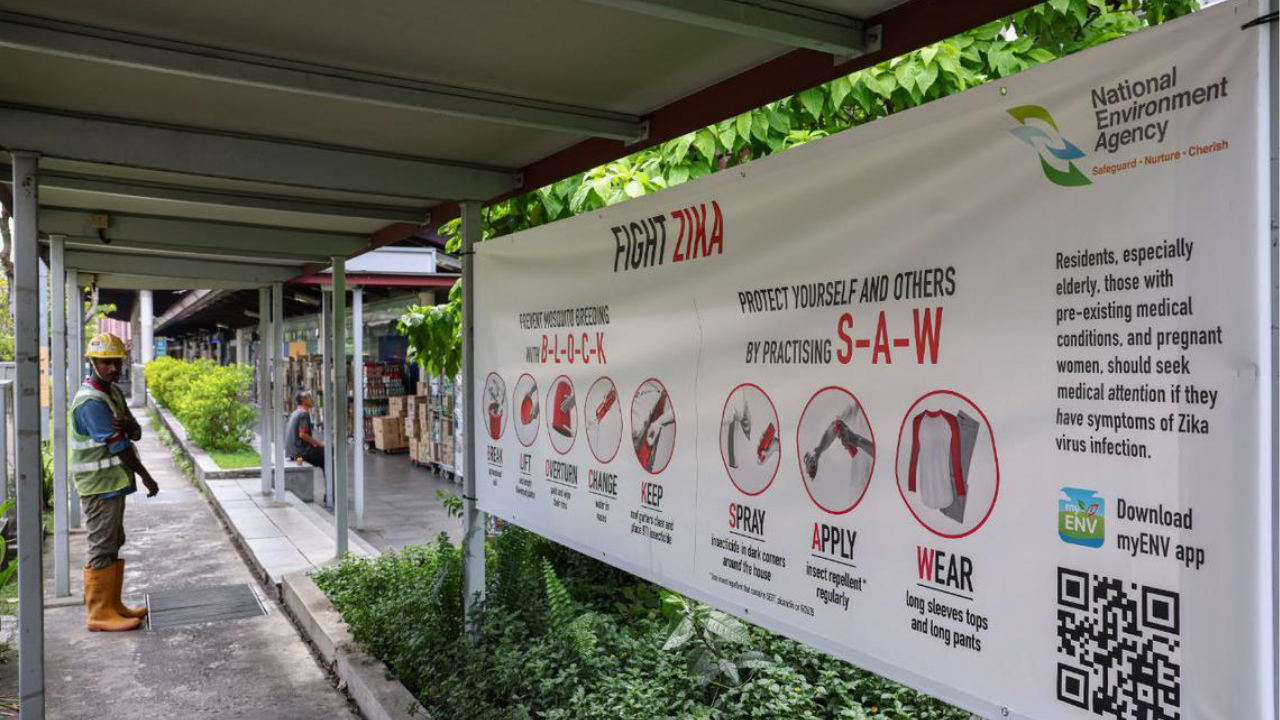
Singapore’s health experts have officially announced that two people in Woodlands, from the areas of Woodlands Street 11 and Street 32, have caught the Zika virus. This news comes from a joint statement by the Communicable Diseases Agency (CDA) and the National Environment Agency (NEA), who are now asking people, especially pregnant women in those areas, to be very careful.
The NEA has been closely watching the situation, and after checking wastewater and looking for mosquitoes in Woodlands homes, they found what they called “persistent Zika virus signals,” meaning the virus is likely spreading in those areas right now. Because of this, both the NEA and CDA are spreading awareness, especially pregnant women, to do what they can to avoid mosquito bites.
Getting Zika while pregnant, even though it doesn’t happen often, can cause serious birth defects like microcephaly. The NEA explained microcephaly as “a condition in which the baby’s head is much smaller than expected for his or her age,” which is a major reason why health authorities are so focused on protecting pregnant women in affected areas.
The Zika virus itself is spread by the Aedes mosquito, which is the same type of mosquito that also carries the dengue virus. If someone starts feeling unwell with signs that might be Zika, such as a headache, red eyes (or conjunctivitis), fever, a rash on the skin, or pain in the joints or muscles, it’s advised that they “see a doctor early.”
The CDA has shared on its website information about how to avoid mosquito bites, especially for those living in Zika-affected areas. They suggest that people “apply an effective insect repellent” regularly, and also to “wear clothing that covers most of the body,” like long sleeves and pants, to reduce exposed skin.
If possible, staying in places that are “well-screened or air-conditioned rooms” can also help keep mosquitoes out. For more details, the public can easily visit the NEA’s website, which has updated information on Zika cases and areas where the virus has been found.