

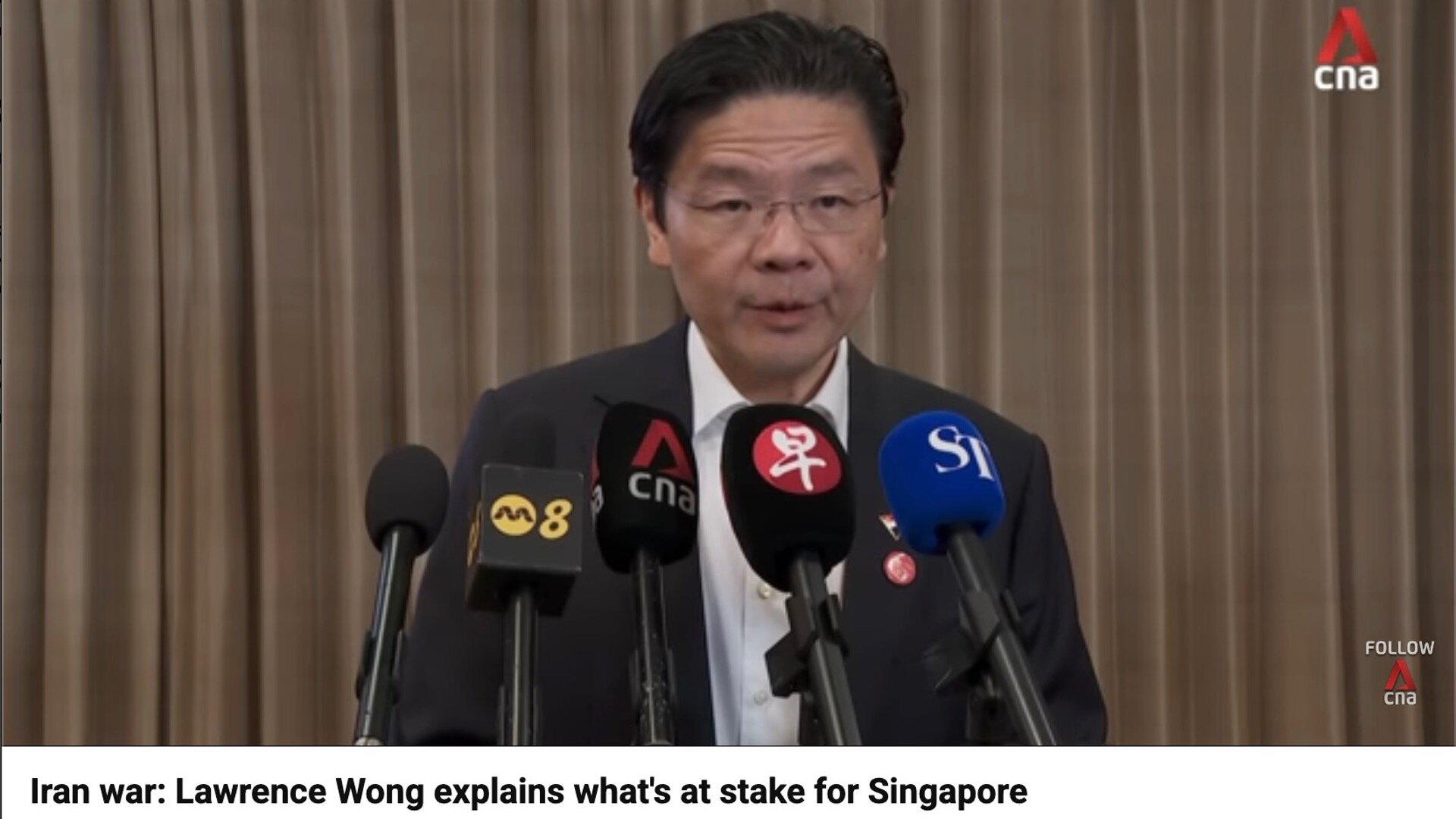
A Singaporean has shared why a recent speech by Prime Minister Lawrence Wong about the situation in Iran felt different from the usual press answers, and why he thinks many people may have missed the point.
His Facebook post has since garnered more than 3,000 reactions, over 400 comments and more than 700 shares.
The man, who goes by the name Yang Mu Ming on Facebook, said that the speech started off in a familiar way, with PM Wong talking about prices, the economy and how global events could affect daily life in Singapore.
However, he said the tone shifted as the speech went on.
Instead of focusing only on cost-of-living issues, PM Wong began talking about something less visible, which is how global rules are weakening, and how countries are increasingly acting based on what they can get away with, rather than what is right.
Yang said that for a small country like Singapore, this kind of environment is not just uncertain, but dangerous.
He also noted that PM Wong appeared to be choosing his words very carefully, speaking in a precise and measured way, which suggested that there was more at stake than what was immediately obvious.
Netizens focused on petrol prices and daily concerns
After watching the speech, Yang said he scrolled through the comments and noticed a wide range of reactions.
Some netizens joked about petrol prices, while others questioned global double standards or dismissed the speech as “just talk”.
There were also some who agreed with the message, although they appeared to be less vocal.
According to him, this made him realise that he used to think in a similar way.
He said that in the past, he would often listen to such issues and immediately ask how they would affect him personally, and if the impact was not obvious in daily life, it felt distant and less important.
Says perspective changed after managing people
However, he shared that his perspective changed after he stepped away from corporate life and started managing people.
Through that experience, he realised how difficult decision-making can be, even within a small team, where people have different expectations, emotions and priorities, and where no decision can satisfy everyone.
He said that if this is already challenging at a team level, it becomes much more complex when scaled up to an entire country like Singapore, where people are informed, vocal and have high expectations, and where every decision and statement is closely scrutinised.
At the same time, he pointed out that leaders are not just managing domestic issues, but also representing Singapore in a global environment that is becoming more uncertain, where rules are not always followed, and power plays a larger role.
In such a situation, he said that words matter, and that one wrong statement could affect international relationships, change perceptions and close off opportunities that are not easy to recover.
Uses kopitiam analogy to explain risks for Singapore
To explain his point, Yang used the example of a kopitiam, where things appear simple from a customer’s perspective, but rely on a complex system of suppliers, pricing and logistics behind the scenes.
If that system breaks down, he said, the stallholder cannot simply fix the problem by working harder, and customers will only notice when food becomes late, more expensive or unavailable.
He said the global system works in a similar way, where rules and agreements help to keep things stable and predictable, and that Singapore relies on this system because it does not compete based on size or strength.
If these rules weaken, he said, larger countries will have more influence while smaller countries will have less room to operate, making stability harder to maintain.
He added that this creates a gap between how citizens and leaders see things, as people tend to focus on outcomes like prices and support, while leaders have to manage underlying conditions that are less visible but equally important.
Yang also pointed out that not all problems can be solved directly, as some are shaped by larger systems and constraints, and that for a small country like Singapore, there is limited room for mistakes.
He further questioned what Singapore offers in return, noting that without scale or resources, it depends on trust, stability and reliability, and that public attitudes also play a role in shaping this.
Reflecting on the speech, he said leadership in such situations is not always obvious, and may involve restraint, careful communication and knowing what not to say.
He added that while Singapore may feel stable now, that stability is not guaranteed, and depends on decisions and relationships that are not always visible.
He ended by raising a question on what would happen if trust weakens, and whether the stability that Singaporeans are used to can still hold.
Netizens’ reactions to the post
The post sparked a wide range of reactions from netizens, with some agreeing strongly with the writer’s perspective.
One commenter said that many Singaporeans are “too spoiled and ignorant” to think beyond their own situation, adding that people often only see outcomes. At the same time, leaders have to deal with difficult choices behind the scenes.
Another pointed out that “a leader’s job is to provide stability, not to be impressive”, suggesting that careful and restrained responses may be intentional rather than weak.
Others echoed the idea that many people focus only on surface-level issues, with one saying the post reflects how some fail to see the bigger picture.
There were also comments showing strong support for Singapore’s leadership, calling for people to “close ranks” and recognise the challenges of representing a small country in a complex global environment.
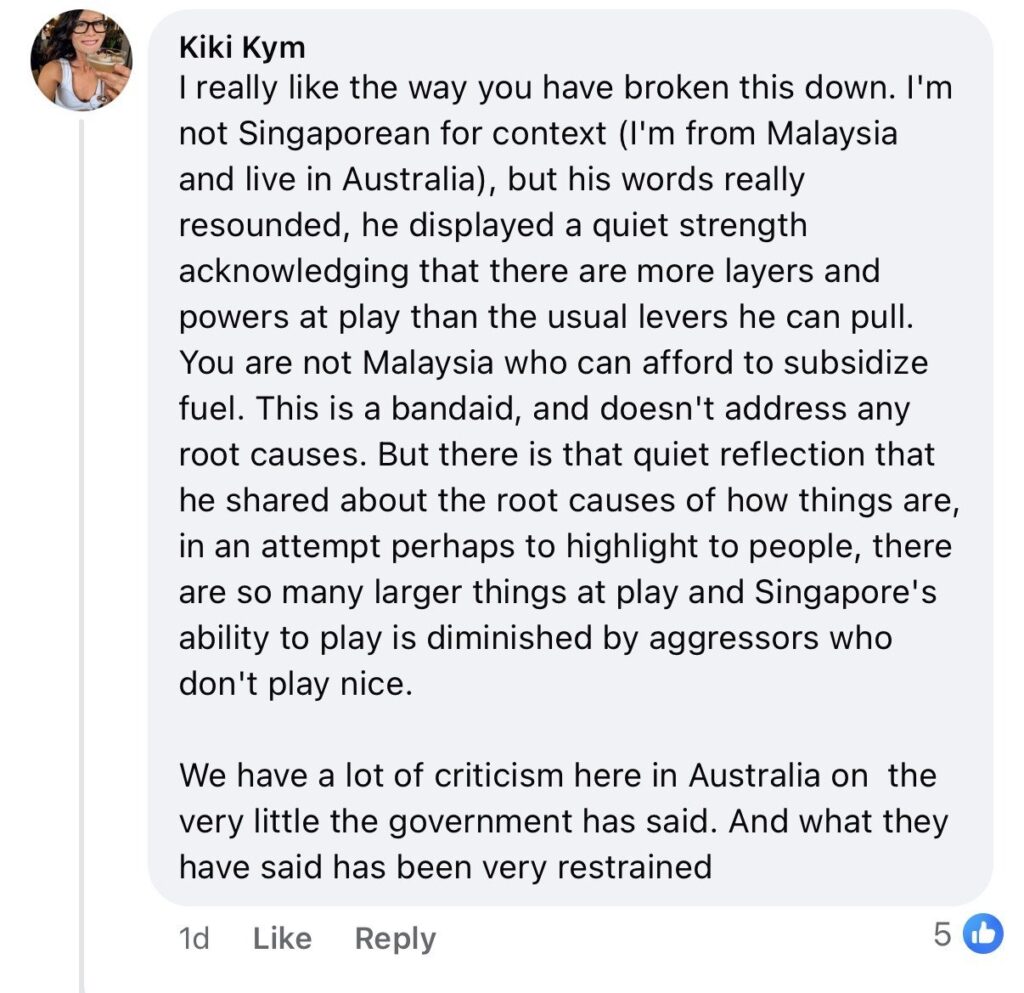
One commenter, who said they are not Singaporean, shared that the speech showed a “quiet strength” and highlighted that Singapore cannot rely on simple measures like subsidies, as larger global forces are at play.
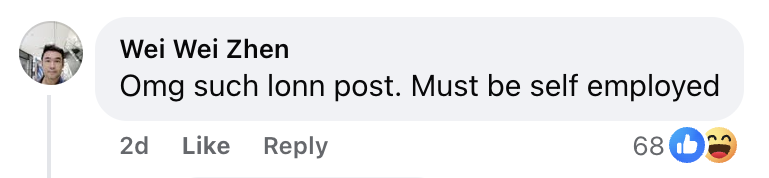
Not everyone agreed, of course. Some dismissed the post as being too long or too “lor soh”.
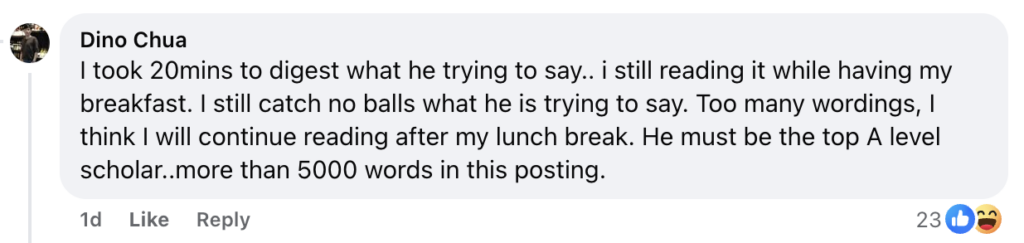
But that quickly drew some rather blunt responses.
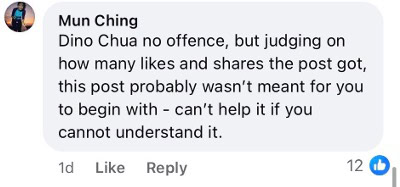
One commenter pointed out that, based on how widely the post had been shared, it clearly resonated with many people, and if someone still could not understand it, the problem might not be the writing.
Another went further, saying that the original poster’s chain of thought is not meant for people of all education levels, essentially implying that if you cannot follow, you probably lack the ability to.
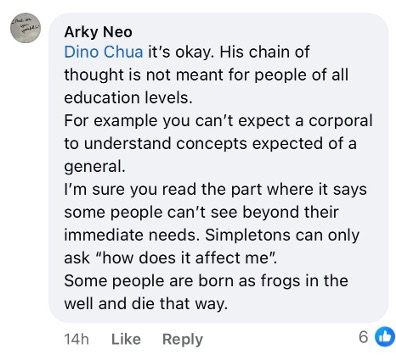
He even said, “Some people are born as frogs in the well and die that way”.
Sibeh savage sia. But don’t know if the frogs know that was meant as an insult or not hor? 🤭
Nevertheless, if you do not want to be a frog in the well, you might want to watch Prime Minister Lawrence Wong explain what is really at stake for Singapore amid the Iran war in the video below: