
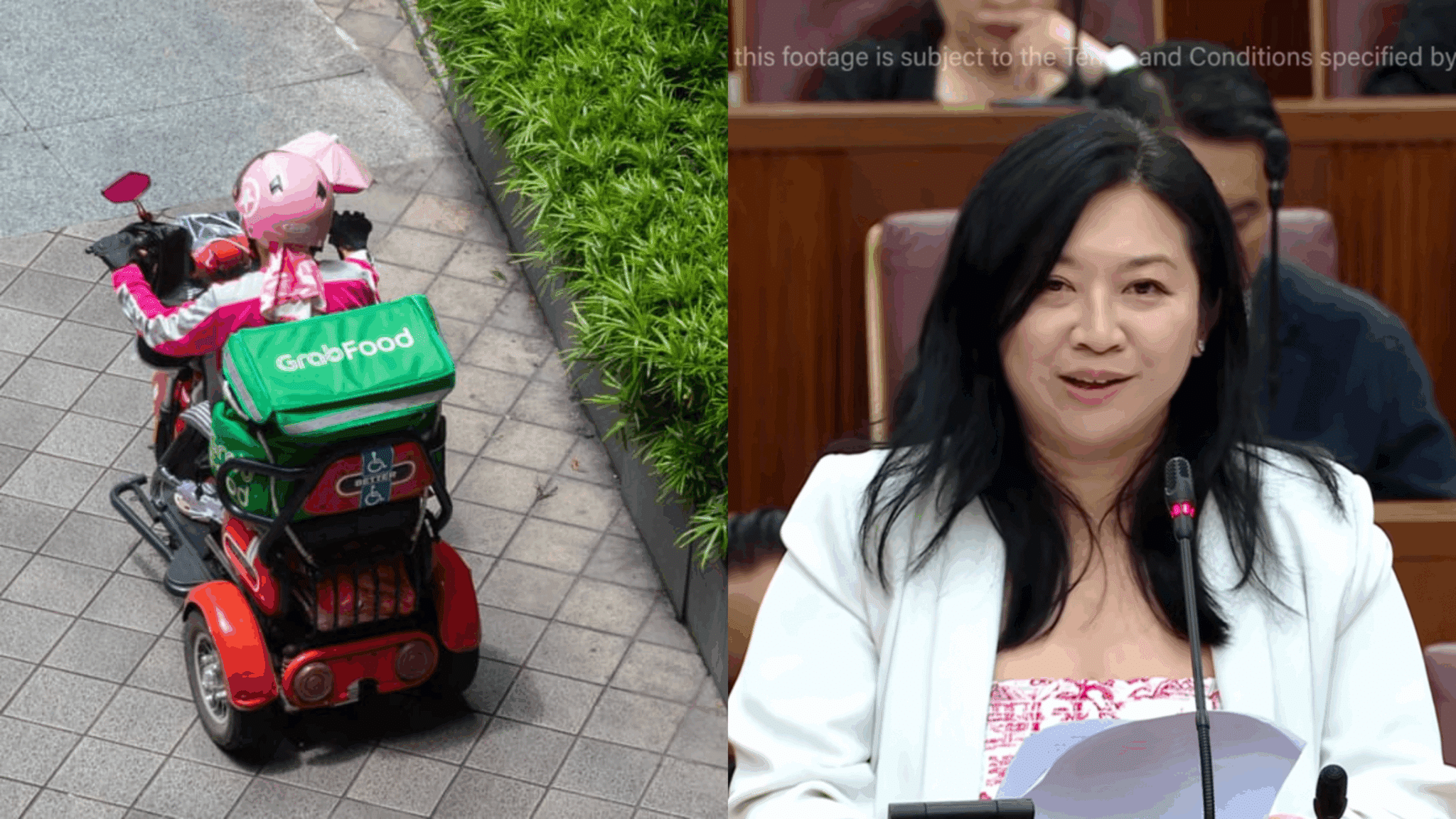
Labour MP Yeo Wan Ling has urged the Government to ensure that new rules governing personal mobility aids (PMAs) do not unfairly penalise delivery riders who rely on such devices to earn a living.
Speaking in Parliament on Feb 3 during the debate on the Land Transport and Related Matters Bill, Yeo said while she supports efforts to improve safety on shared paths, the way new regulations are implemented will have real consequences for workers on the ground, particularly platform workers who depend on PMAs for their daily income.
Declaring her interests as NTUC Assistant Secretary-General, advisor to the National Delivery Champions Association (NDCA), and Executive Secretary of the National Transport Workers’ Union, Yeo stressed that platform work is not a convenience for many riders, but “a hard-won pathway to independence”.
Speed limit reduction could significantly affect earnings
One major concern raised by Yeo was the proposed reduction in PMA speed limits from 10km/h to 6km/h, which she said would lengthen delivery times and reduce the number of jobs riders can complete in a day.
She cited feedback gathered through union engagements, noting that riders’ earnings could drop by 30 to 40 per cent if delivery targets and incentives are not adjusted.
Yeo said platform work associations, including NDCA, have raised these concerns directly with platform operators and have since obtained in-principle commitments to review delivery targets and work arrangements for full-time PMA riders.
She also urged the Government to work closely with platform operators to monitor the impact after implementation, and to be prepared to provide targeted transitional support if financial hardship emerges.
Concerns over medical certification and compliance costs
Yeo also spoke about the proposed Certificate of Medical Need, which would be required for PMA users under the new framework. While supporting the intent to prevent misuse, she cautioned against overly rigid criteria that could exclude users with genuine mobility needs.
She noted that medical certification can cost between $50 and $100, which may be a significant burden for lower-income riders.
To help offset these costs, Yeo said NDCA will provide financial assistance to subsidise out-of-pocket expenses such as medical certification and the installation of speedometers.
NDCA is also in discussions with affiliate GP partners to make medical assessments and certification more affordable and accessible, she added.
Yeo further asked the Government to consider whether polyclinics would be able to issue the required medical certificates, and whether additional assistance could be provided for essential equipment needed to comply with the new rules.
Call for education-first enforcement
On enforcement, Yeo urged an education-first approach during the initial phase of implementation, noting that some PMA users will need time to adapt to new speed limits, device requirements and certification rules.
She called for reasonable grace periods and discretion, especially in cases of genuine mistakes, stressing that while clear rules are important, compassionate implementation matters just as much.
Yeo also highlighted NDCA’s on-the-ground engagement with delivery riders across Singapore, including discussions on enforcement issues, rider safety and last-mile delivery challenges. She said feedback from these engagements has been channelled through formal platforms such as the Active Mobility Advisory Panel, and that NDCA will continue working with agencies and platform operators through the tripartite framework to mitigate the impact on livelihoods.
Yeo concluded her speech by reiterating her support for the Bill, while emphasising that safety measures must not come at the expense of delivery riders who depend on PMAs to earn an honest living.