
A wedding convoy that repeatedly honked its car horn early in the morning has drawn complaints from residents who said the noise disrupted their sleep and “woke up the entire neighbourhood”.
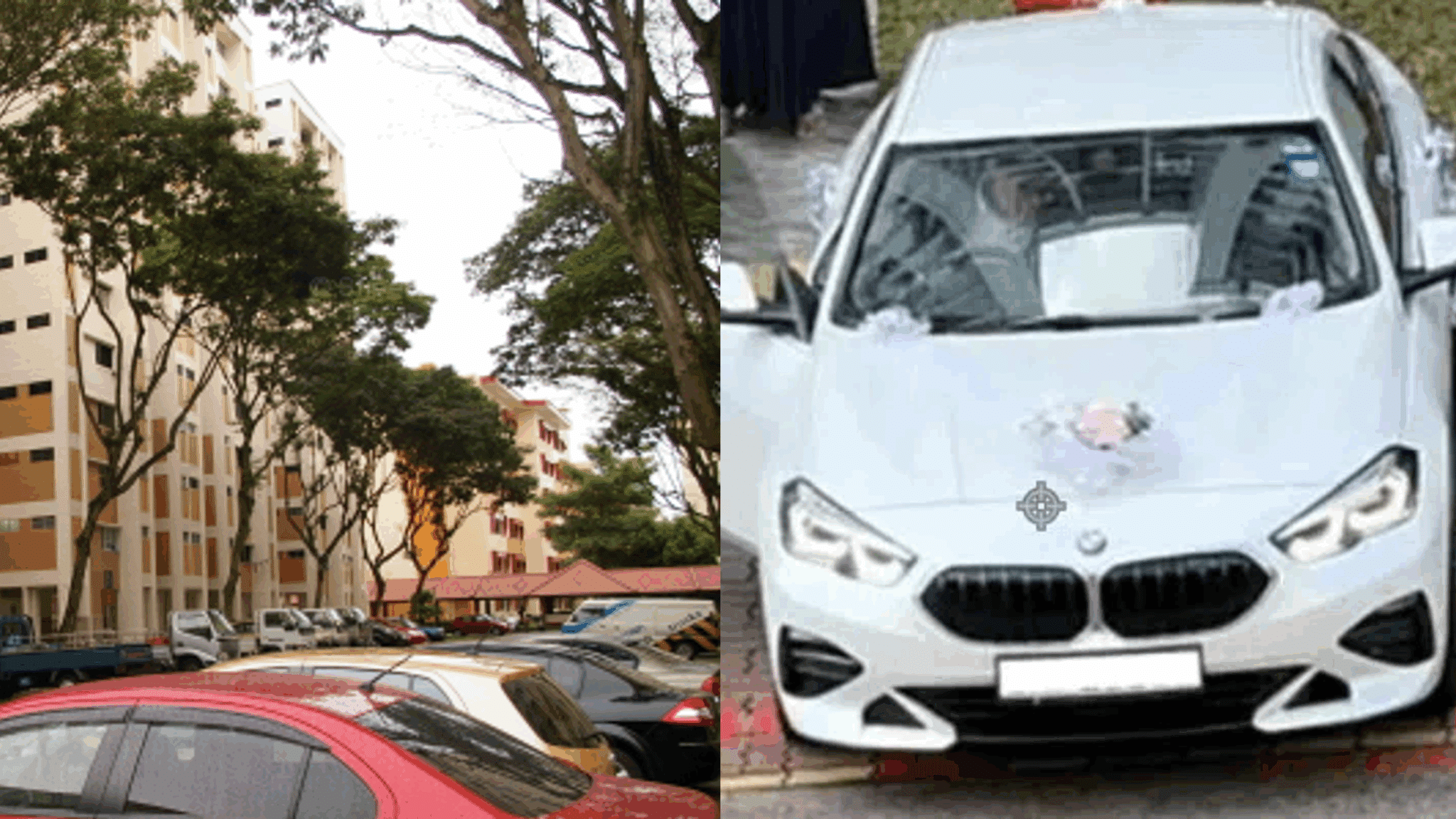
The incident occurred at around 6:15 am on November 30 at the open-air car park at Block 161 Bukit Batok Street 11.
Residents said a white BMW, believed to be part of a wedding convoy, was parked beneath the HDB block and had been honking continuously. Some described the noise as loud enough to wake many households. It is generally believed that the honking was part of the groom’s ritual of fetching the bride.
One resident criticised the behaviour, saying:
“This kind of behaviour is very selfish and shows no consideration for others. It was a Sunday, when everyone was at home resting and sleeping.”
Ms Liu, a 30-year-old administrative clerk living in a HDB estate in the Clementi area, told Shin Min Daily News that she had encountered a similar situation before, where a wedding convoy honked for as long as five minutes.
“I would find it noisy, and even feel embarrassed for them,” she said.
Another member of the public, Ms Wu (33), took a more understanding view, noting that Singapore is a multicultural society and people should be more accommodating of different customs.
“I can be understanding. After all, whether it is a wedding or a funeral, these are major life events. We should be happy for the newlyweds,” she said.
Ms Wu also pointed out that some couples had previously put up notices in lifts before their bride-fetching ceremonies to seek neighbours’ understanding. She felt this was a more considerate approach that others could follow.
Traditional customs should still consider others
A folklorist said that while traditional wedding practices are meant to create a festive atmosphere, consideration for others should not be overlooked.
Fortune teller Master Chang Jue said that Teochew couples typically fetch the bride in the early morning hours.
“According to tradition, fetching the bride before sunrise is meant to avoid white events or pregnant women. Couples from other dialect groups usually choose an auspicious date and time instead,” he explained.
He added that in ancient times, gongs and drums were played during bride-fetching ceremonies to ward off evil spirits. In the 1950s, tin cans were sometimes tied to the back of wedding cars, producing a clanging sound as the vehicle moved.
“This custom is now seldom seen, as it would create noise,” he said.
Another fortune teller, Xu Yiting (transliteration), said that honking car horns is a relatively new practice.
“It is meant to build momentum, make the occasion feel grand, and symbolise blessings for the bride and groom to have a prosperous family and a smooth life ahead,” she said.
She added that while honking in HDB estates may be done to seek good fortune for the wedding, couples should still take care not to disturb others.