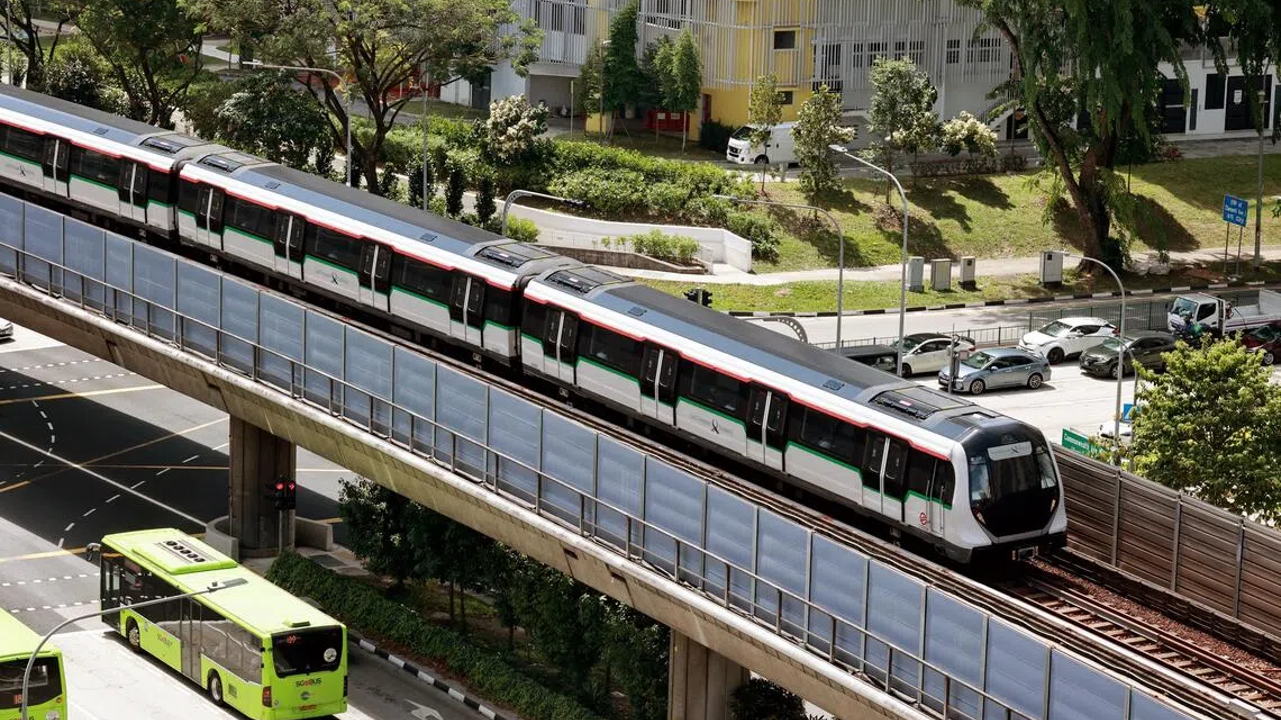
Public transport fares in Singapore will go up by 5 per cent from December 27 this year.
This means adult fares paid using travel cards or bank cards will increase by 9 to 10 cents per trip. Concession fares for seniors, students, low wage workers on concession schemes and persons with disabilities will stay the same for short distance trips, but will increase by 3 to 4 cents for trips longer than 3.2 kilometres.
Currently, about 2 million passengers enjoy concession fares. More than one-third of them, or around 450,000 passenger trips, will not be affected by this round of fare adjustments. Most adult fares are expected to increase by 9 cents, while fares for trips longer than 17.2 kilometres, such as from Bukit Panjang to the city, will increase by 10 cents.
The Public Transport Council announced the changes at a press conference on Tuesday (October 14). It has approved an overall 5 per cent fare increase. This will be the fifth year in a row that fares have gone up for MRT and public bus services. However, this year’s increase is lower than the 6 per cent rise last year and the 7 per cent rise the year before.
The Council said that part of the fare hike will be deferred to future fare reviews to ease the impact on commuters. It will also provide additional support for those who rely heavily on public transport to help manage their daily travel costs.
Monthly pass prices reduced to help commuters manage costs
To support vulnerable groups, the price of hybrid MRT and bus monthly concession passes will be reduced by up to 5 per cent. For example, the monthly pass for seniors and persons with disabilities will drop from $58 to $55, while the low-wage worker concession pass will drop from $96 to $92. The price of student concession passes will stay the same.
The price of adult monthly passes will also be reduced by 5 per cent, from $128 to $122. Around 16,500 adult monthly passes are sold each month. Based on current spending, about 44,000 commuters spend more than $122 on transport monthly. By purchasing a monthly pass, they can save on travel expenses.
In total, the price reduction is expected to benefit around 155,000 commuters. Two years ago, the Council also lowered monthly pass prices by up to 10 per cent.
Express and City Direct bus fares to rise more, cash fares also going up
Fares for express buses and City Direct services will also increase. The cost of operating these services is 1.5 times higher than basic bus routes, and their fares are already about 25 per cent more expensive. Daily ridership on these services is about 28,000 trips, which is around 1 per cent of all bus trips.
To reflect the higher costs, the fare difference between express and City Direct services and basic bus services will be widened. Currently, the adult fare per trip is 60 cents higher than basic bus fares. This will increase by 40 cents, marking the first increase in the fare gap since 2010. The fare hike for these services will range from 49 to 50 cents.
For concession fares, the difference is currently between 30 and 50 cents more than basic bus fares. This will increase by 20 cents, resulting in a fare hike of between 20 and 24 cents per trip.
Cash fares will also increase. Adult cash fares will go up by 20 cents, senior and disabled fares by 10 cents, and student fares by 5 cents. Express and City Direct bus cash fares will increase by 60 cents. Currently, less than 1 per cent of passengers still pay cash.
Fare adjustment formula updated, fare cap lowered to 1.5 per cent
As energy prices went down in the first half of the year, the Council based its fare adjustment not just on last year’s costs but also on the first six months of this year, using an 18-month data period.
This calculation lowered the fare cap to 1.5 per cent, compared to 3.3 per cent last year. If the calculation had been based only on last year’s 12-month data, the fare cap would have been 2.4 per cent.
This 18-month method is temporary. Next year, the Council will return to using a 12-month period from July this year to June next year.
With the 12.9 per cent fare increase carried over from last year, the maximum allowable increase this year is 14.4 per cent, or around 21 cents. However, to cushion the impact on commuters, the Council will only implement a 5 per cent fare increase and carry forward the remaining 9.4 per cent to future fare reviews.
Government to give extra subsidies and distribute transport vouchers
The government will provide more than $200 million in extra subsidies to offset rising operating costs and ensure fares remain affordable. This is on top of the $2 billion in annual operating subsidies and nearly $1 billion over the next eight years for improving bus connectivity.
Like last year, the government will also distribute $60 Public Transport Vouchers to lower and middle-income households. These vouchers can be used to buy monthly passes or top up fare cards.
The 5 per cent fare increase is expected to bring in about $115.5 million in additional annual fare revenue. Of this, $62.3 million will go to the Land Transport Authority from bus fares and Thomson East Coast MRT line fares to reduce subsidies. SMRT Trains and SBS Transit’s fare revenues will increase by $35.6 million and $17.6 million, respectively.
The Council has also required SMRT and SBS Transit to contribute $7.13 million and $3.52 million, respectively, to the Public Transport Fund, which makes up 20 per cent of their expected increase in fare revenue.