
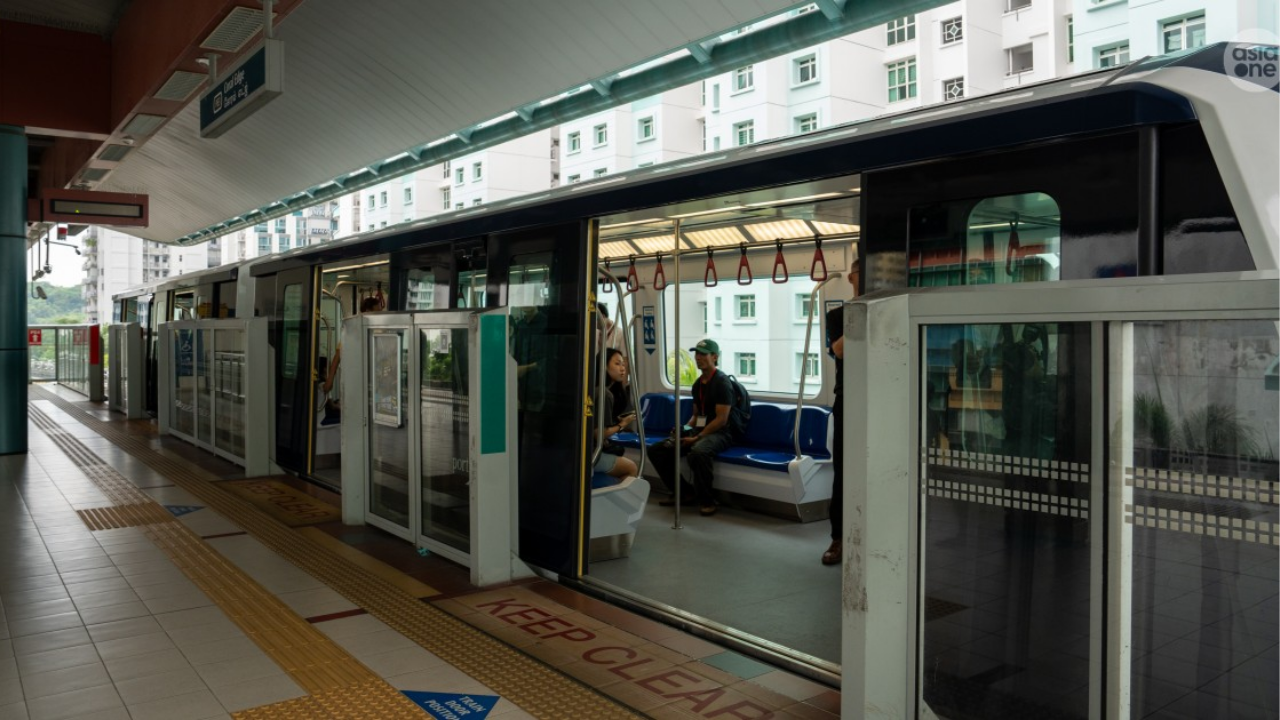
The first two new-generation two-car LRT trains began service on the Sengkang-Punggol LRT system on Tuesday (15 July), with more to come progressively until 2028. Once all 25 new trains are deployed, they will fully replace the current single-car trains to better meet rising commuter demand in these growing estates.
Deputy Prime Minister and Minister for Trade and Industry Gan Kim Yong and Senior Minister of State for Transport and National Development Sun Xueling were present at Punggol LRT Station to witness the launch. Both are also MPs for Punggol GRC. They later boarded the train along the Punggol East Loop with fellow MPs.
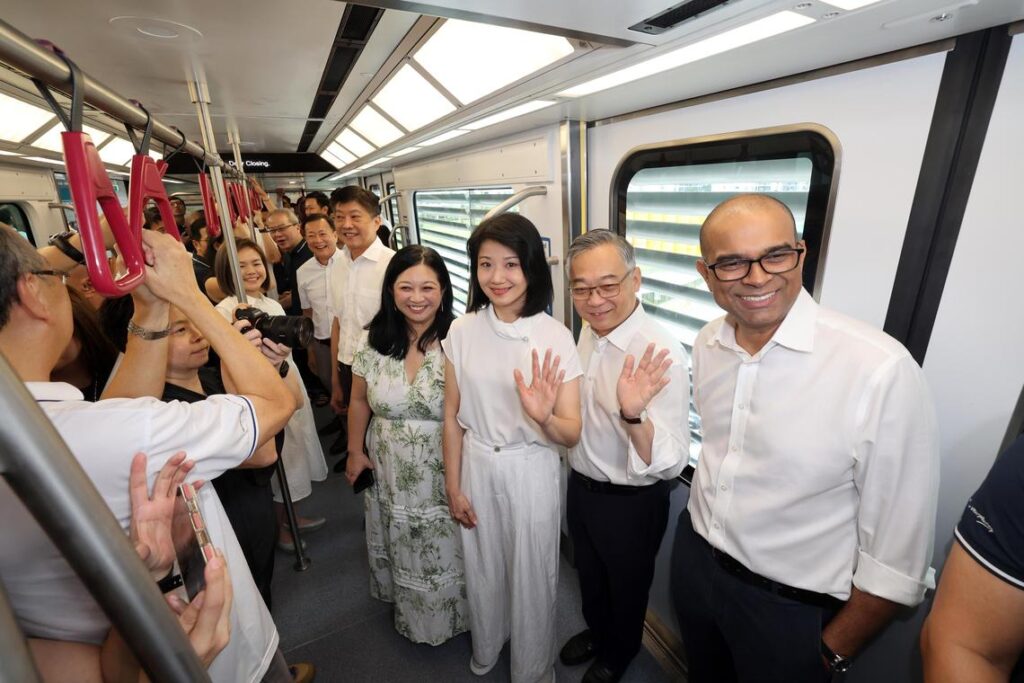
According to a joint statement by the Land Transport Authority (LTA) and SBS Transit, the new trains will only operate on weekends for the next two weeks on the Punggol East and West Loops. They will start weekday service from the end of July.
To cope with the increasing ridership in Sengkang and Punggol, LTA previously ordered 25 two-car trains to replace the ageing fleet of 25 single-car trains and 8 older two-car trains, which have been in service since 2003. Each car can carry about 100 passengers.
Made in Japan, All 25 Trains to Be Ready by 2028
The third-generation trains were built by Mitsubishi Heavy Industries in Mihara, Japan. The first two units arrived in Singapore in November 2023, with the next two expected to begin service in October this year. The remaining 21 trains will arrive in batches and start running after testing is complete.
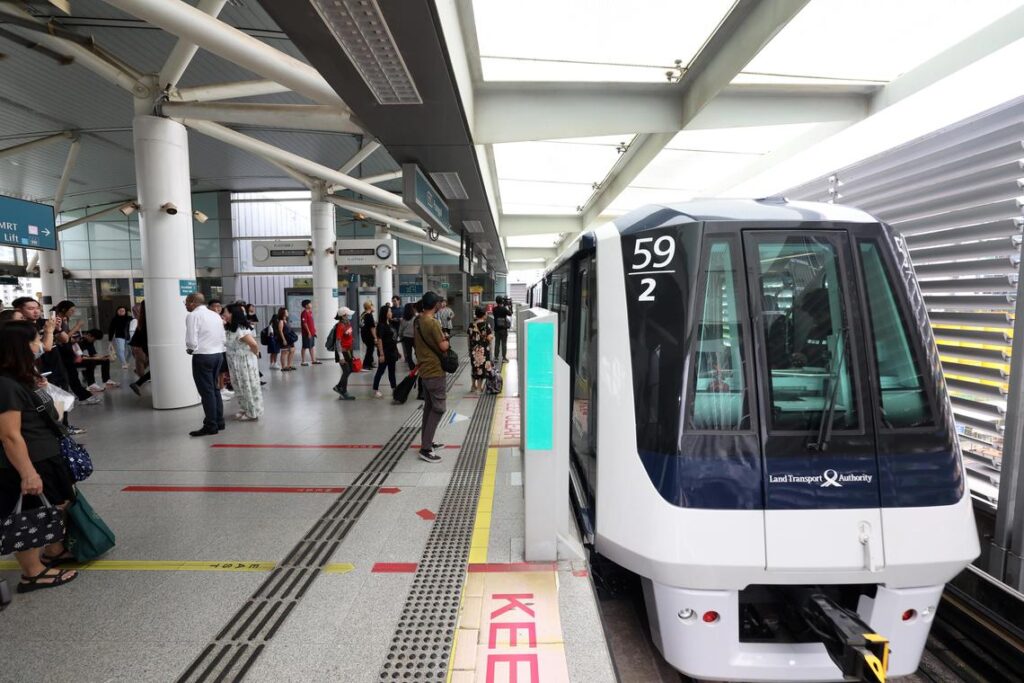
By the end of 2028, the entire Sengkang-Punggol LRT system will be served by 33 two-car trains, including the 8 second-generation ones, to boost capacity and reduce waiting times. LTA also plans to repurpose parts of the retiring first-generation trains for community use.
Currently, the LRT system has 29 stations, including the newly opened Teck Lee Station in August 2023.
According to SBS Transit’s annual report, the Sengkang-Punggol LRT system had an average daily ridership of 160,788 last year, up 1 per cent from 159,223 the year before, and a significant 14.5 per cent increase from 140,456 in 2019 before COVID.
Smoother Ride and Faster Emergency Evacuation
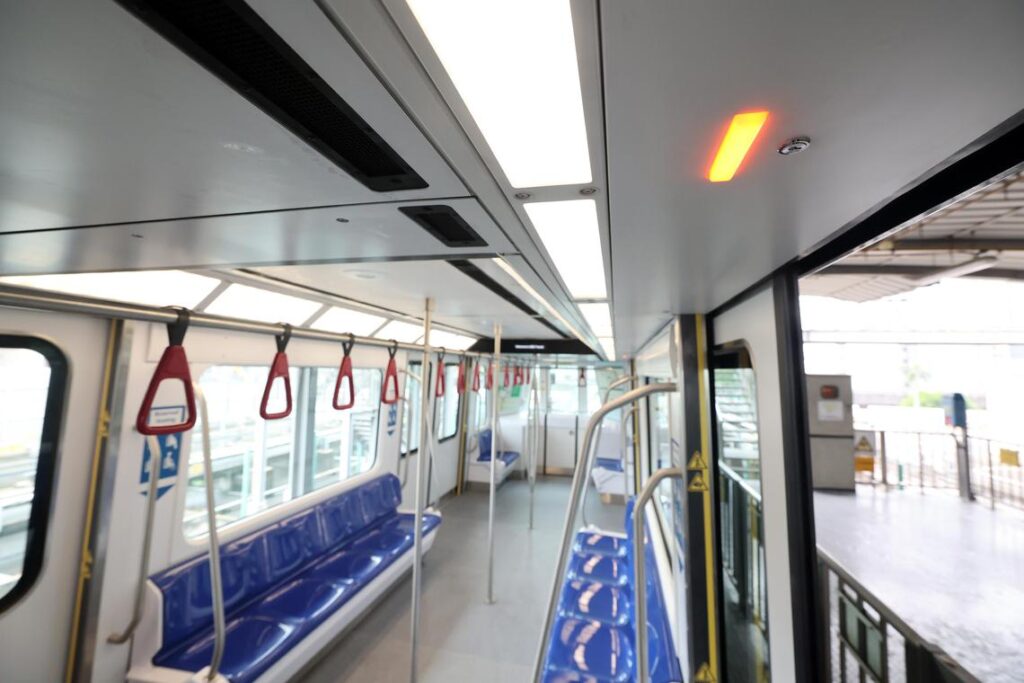
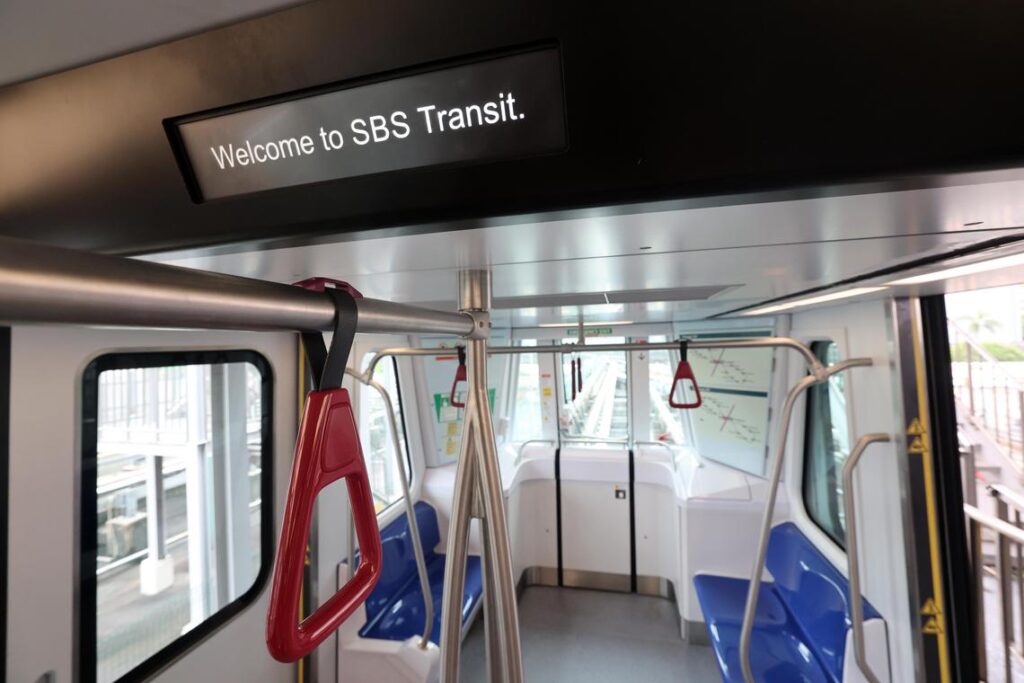
To improve passenger experience, the new trains come with better seat layouts, clearer display panels, brighter lighting, improved air-conditioning, and warning lights at the doors that flash when they are about to close.
The trains also feature touchscreen panels to help maintenance teams identify faults quickly, and redesigned doorways between train cars that make it safer and faster for passengers to evacuate in an emergency.
The Sengkang and Punggol LRT depot is also undergoing major upgrades. The depot will be expanded from 3.5 hectares to 11.1 hectares by 2027, with more space for train parking and maintenance. It will include 18 additional parking bays, two new reception tracks for faster train dispatch, and three extra traction power substations to support the new fleet’s electricity needs.
LTA said some adjustments to LRT services will be made during the upgrade, and more details will be shared later.
Residents Welcome the Upgrade
Sun Xueling, who has served the Punggol area for almost a decade, said residents have been eagerly awaiting the new trains. With higher capacity and a better ride experience, the upgrade is timely and necessary.
One commuter, a 24-year-old university student who grew up in Punggol, said she often had to wait for two or three trains before she could board during morning peak hours. “Sometimes I was late for class because of this. But the LRT is still faster and more reliable than the bus, so I stick with it,” she said.
She finds the new train more spacious and airy. “It feels cleaner and better ventilated.”
A 64-year-old retiree who takes the Punggol LRT daily to visit her granddaughter said,
“The LRT is usually fine, but during rush hour, it gets really packed with just one car. The switch to two-car trains will definitely be more comfortable and convenient for us commuters.”