
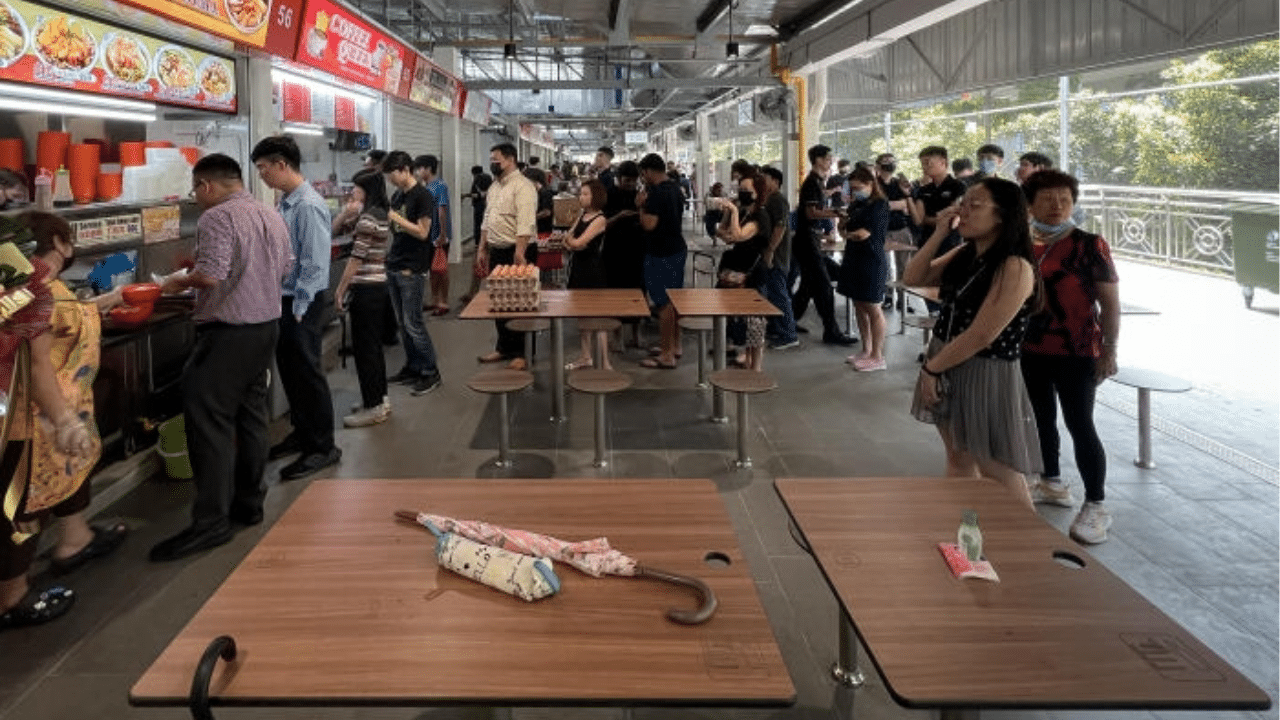
The National Environment Agency (NEA) recently addressed false claims circulating online regarding fines for “choping” seats at hawker centres in Singapore.
The agency clarified in a Facebook post that the common practice of reserving seats with items like tissues or umbrellas will not result in fines, debunking the misinformation that had been spreading.
According to the post, NEA stated, “Recent messages about penalties for reserving seats at hawker centres, as well as the implementation of ‘chope-free’ zones, are false.” This served as a reassurance to individuals who partake in the cultural practice of “choping” seats at these dining establishments.
The false information concerning the introduction of “chope-free” zones at hawker centres also made rounds on social media. Individuals claimed that certain areas at hawker centres would be designated as “chope-free” zones, where diners would be prohibited from reserving seats with items and repeat offenders would face penalties, including a “release fee” to retrieve their confiscated items.
However, NEA dispelled these claims, emphasizing that fines for “choping” seats and the implementation of “chope-free” zones are not in effect.
While NEA clarified that fines are not imposed for “choping” seats, it also reminded the public to be considerate while dining at hawker centres to ensure an enjoyable experience for all patrons. The agency’s statement received diverse reactions from netizens. Some expressed surprise that the misinformation had been widely believed, while others voiced varied opinions on the cultural significance of “choping” seats at hawker centres.
The practice of reserving seats, commonly known as “choping,” has been a longstanding topic of discussion. It has not been unique to Singapore, as demonstrated by a Japanese TikToker’s demonstration of reserving seats in a Japanese food court, which drew parallels to the Singaporean practice of “choping.” This cultural aspect has garnered attention over the years, with individuals from different backgrounds expressing differing perspectives on its significance.