
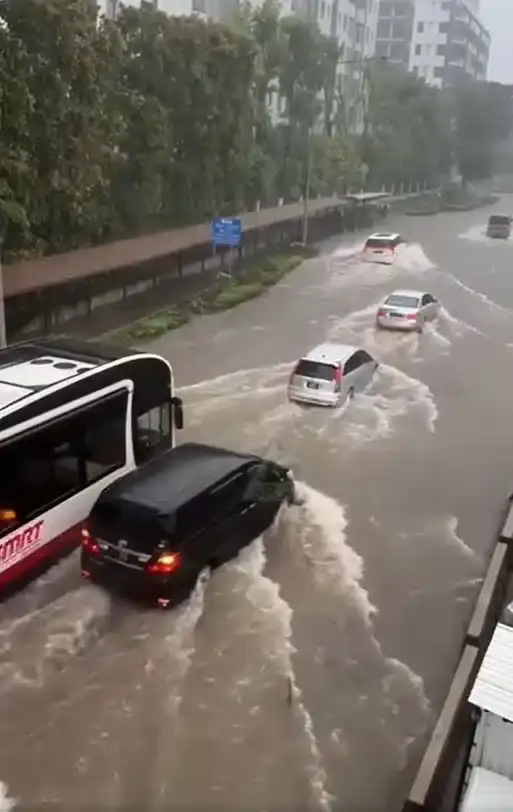
Following a morning rain on Oct 14, a bus passenger’s video went viral, revealing knee-high floodwater inside a bus at a Bukit Timah bus stop. The event brought attention to the ongoing problem of flooding in the region, with PUB stating that water levels had decreased in 20 minutes.
Dunearn Road in Bukit Timah, a notorious flooding location, was submerged because of elevated water levels in surrounding drains and the Bukit Timah Canal. PUB highlighted continued efforts to reduce flooding risks through projects like raising roads and widening canals. The agency stated that the western region of Singapore experienced intense rain, reaching 80% of the usual monthly rainfall for October, highlighting the seriousness of the weather event.
According to the news source, the increase in flooding cases in Bukit Timah after heavy rain has sparked worries about the area’s susceptibility to such weather occurrences. Videos circulated on social media showed the urgent scene of floodwater reaching the knees of passengers inside a bus at a bus stop, demonstrating the instant consequences of the heavy rain on commuters and public transport. PUB’s quick reaction to the floods, providing alerts and clarifying the root causes, highlights the continuous work to tackle the repeat problem.
PUB’s announcement about finishing the road-raising and continuous canal improvement projects in Bukit Timah highlights the persistent efforts to improve flood prevention in the region. The aim is to finish these projects by 2026 to reduce flooding risks and protect the community from future heavy rainfalls. PUB has identified Dunearn Road as a major flooding spot and has taken proactive steps to solve drainage problems and enhance the area’s ability to withstand severe weather.
The intense downpour in western Singapore, exceeding previous daily records, emphasizes the severity of the recent weather phenomenon and its effects on local infrastructure. Due to climate change causing increased and harsher weather patterns, the flooding in Bukit Timah highlights the importance of resilient urban planning and infrastructure development. While working together, residents and authorities aim to find sustainable solutions for flooding in vulnerable areas, focusing on resilience against future weather events and safeguarding communities from water-related dangers.